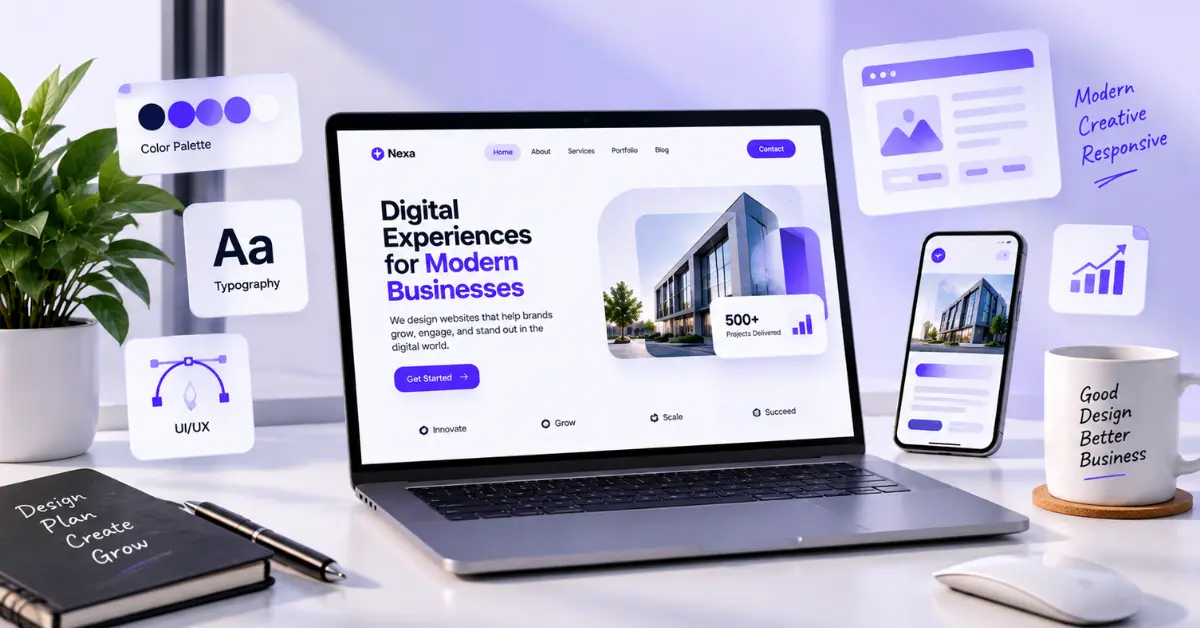
A business website is no longer just an online brochure. Today, customers expect websites to be fast, attractive, easy to use, and accessible across every device. As digital competition continues to grow, modern web design plays an important role in how people discover, understand, and interact with a brand.
The right design trends can help businesses create better user experiences, build credibility, and turn more visitors into customers. Here are some of the top web design trends shaping modern business websites.
1. Clean and Minimal Designs
Minimalism continues to be one of the most effective approaches to modern web design. Clean layouts, generous spacing, simple navigation, and focused content make websites easier to understand.
Instead of filling every section with unnecessary elements, modern websites focus attention on the information that matters most. This creates a professional appearance while helping visitors find what they need quickly.
2. Mobile-First Design
A large portion of website traffic now comes from smartphones and tablets. Because of this, businesses need websites that work smoothly on smaller screens as well as desktops.
Mobile-first design focuses on responsive layouts, readable typography, simple navigation, touch-friendly buttons, and optimized images. A website that provides a consistent experience across devices can keep visitors engaged for longer.
3. Bold and Purposeful Typography
Typography has become an important visual element in modern websites. Large headings, distinctive fonts, and clear text hierarchy can make a website more memorable.
However, typography should always support readability. Using a strong heading style combined with simple body text can create a balance between personality and usability.
4. Engaging Micro-Interactions
Small animations and interactive elements can make a website feel more responsive and engaging. Examples include button animations, hover effects, smooth transitions, scrolling animations, and loading effects.
When used carefully, these interactions can guide visitors through a website without distracting them from the main content.
5. Strong Visual Storytelling
Images, illustrations, videos, icons, and graphics can communicate ideas faster than large blocks of text. Modern businesses are using visual storytelling to explain their products, services, processes, and brand personality.
The key is to use visuals that support the message rather than simply decorating the page.
6. Faster Website Performance
Good design is not only about appearance. Website speed has a major impact on the overall user experience.
Large images, unnecessary animations, excessive plugins, and poorly optimized code can slow down a website. Modern web design focuses on optimized media, efficient layouts, clean code, and fast-loading experiences.
7. Personalized User Experiences
Businesses are increasingly using technology to create more relevant experiences for their visitors. Personalized recommendations, location-based content, smart search, and tailored calls to action can help users find information that matches their needs.
Even simple personalization can make a website feel more useful and customer-focused.
8. Accessible and User-Friendly Design
Modern websites should be designed for as many people as possible. Clear contrast, readable typography, descriptive labels, logical navigation, and keyboard-friendly interactions can make websites easier to use.
Accessibility is not only good practice—it also helps create a better experience for everyone.
9. Conversion-Focused Layouts
A beautiful website is valuable, but it should also help achieve business goals. Modern websites strategically place calls to action such as Get Started, Request a Quote, Book a Consultation, or Contact Us.
Clear messaging and well-placed CTAs help guide visitors toward the next step instead of leaving them unsure about what to do.
10. A Strong Brand Identity
Modern web design is also becoming more brand-focused. Consistent colors, typography, illustrations, imagery, and messaging help businesses create a recognizable digital identity.
A strong visual identity can make a website feel more professional and help customers remember the brand.
Conclusion
Web design trends will continue to evolve as technology and customer expectations change. However, the most effective websites are not necessarily the ones using every new trend—they are the ones using the right design choices to create a clear, fast, accessible, and engaging experience.
For modern businesses, investing in thoughtful web design can help build trust, strengthen their brand, improve user experience, and create more opportunities online.
The goal isn’t simply to follow trends. It’s to create a website that works beautifully for your customers and your business.